Review of Even These Things at Royal Exchange, Manchester.
When an IRA bomb exploded in Manchester city centre on 15 June 1996, the force of the blast caused the Royal Exchange to shift several inches, leaving the building precariously misaligned with its foundations, and resulting in the theatre within having to relocate for two years.
The centre piece of Rory Mullarkey’s new play, premiering as part of the Exchange’s 50th anniversary programme, takes place on that dramatic day – with a succession of recollections populating the countdown to the explosion.
There’s even a glimpse of the theatre’s front of house manager, spinning around on stage, as they liked to do before anyone else arrived for work – looking through the glass dome above to the blue skies outside. A day, just like any other. Or so they thought.
Not content with contemplating a pivotal moment in the city’s history, Even These Things is a time-travelling triptych. Sandwiching tales from the city on that sunny morning, between a chance encounter in a park in the present day and a story from Manchester’s most notorious nineteenth century slums.
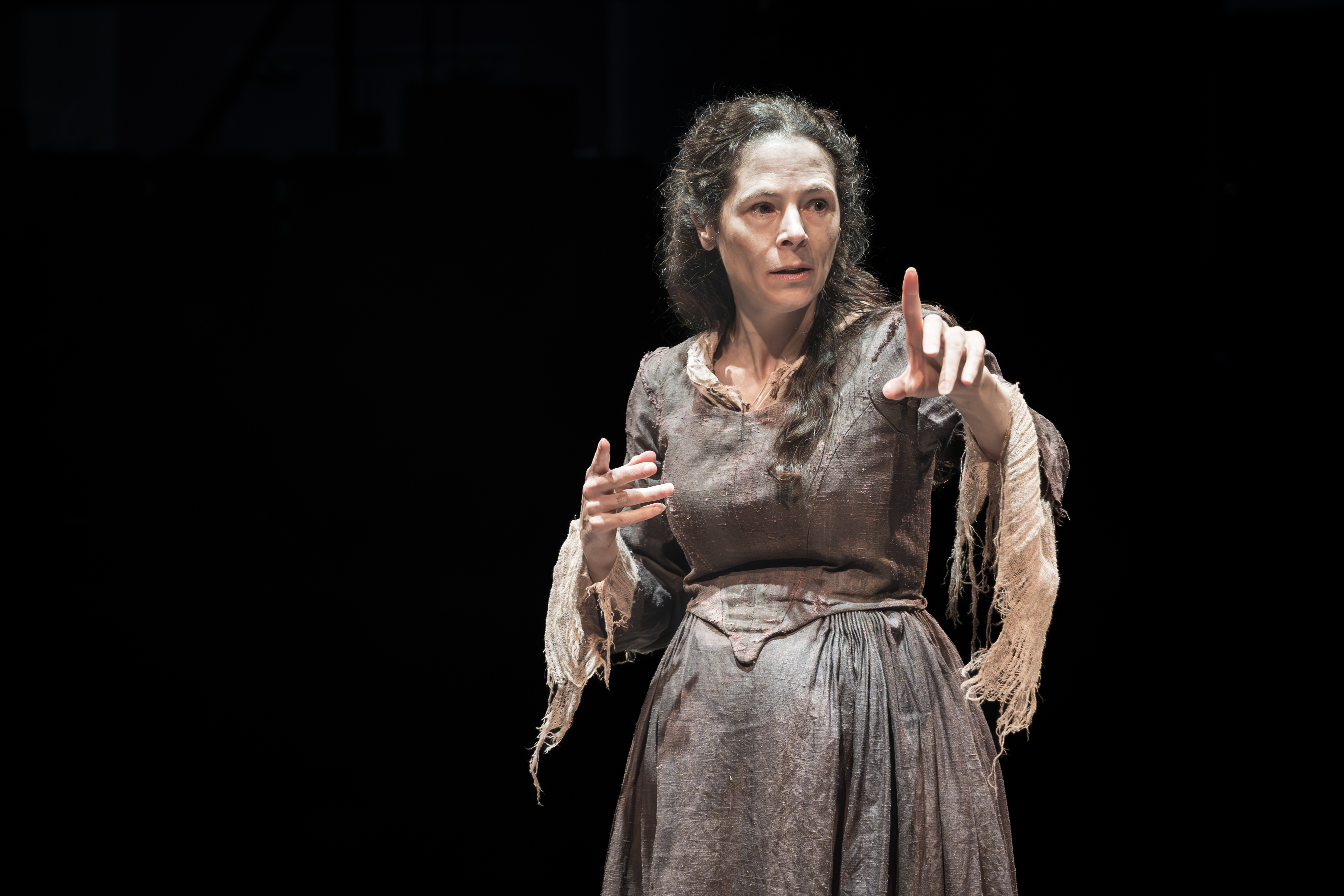
In a blistering opening scene, Annie Donovan, determined to avenge the theft of her pig, helter-skelters towards a showdown with Lizzie Crosby – the woman who she believes has not just stolen her beloved animal, but fed it to her family.
An inhabitant of Angel Meadow, in 1846, Annie emerges from the dust of the past, and the squalor and deprivation of the time, like a force of nature.
Mullarkey creates a character firmly rooted in the details of the time, listing all the pubs she’s barred from, giving Friedrich Engels (“German Fred”) a piece of her mind, and ‘feasting’ on a chicken bone doused in boiling water.
Yet, she is somehow magically real, her dogged storytelling enchants, and although she may be reduced to snatching her skirts up from piles of horse manure, there is something transcendent about Annie Donovan.
Partly that’s the writing, almost Carteresque in its earthy eloquence, but it’s also due to an astonishing performance from Elaine Cassidy, who drags you by the scruff of the neck into Annie’s world. There’s an unabashed swagger to her chatter, as on a bare stage, she conjures up conversationally a teeming neighbourhood – vividly describing the people she meets, the hardships of the times, and a burning grudge which will be her undoing.
As the fierce, fearless, no-nonsense Annie, Cassidy is electrifying – in total command of the space.
Back in 1996, on that fateful morning, things become more measured. There are regular time checks, as Katherine Pearce’s narrator talks us though an inconsequential catalogue of city life, each occurrence bringing us ever closer to the moment of explosion.
Every piece of the timeline is brought to life by an industrious community cast of over one hundred local people and an indefatigable and ingenious production team.
A woman swims a pool’s length through the theatre, an elderly couple at a restaurant table slowly rotate across the stage as if on a gentle fairground ride, and the Queen Victoria statue in Piccadilly Gardens comes to life.
As it flickers through the morning, there’s loneliness, and adventure, and music, and stress, and people can be cruel, and kind. A dog draws oohs and aahs from the audience, as does the appearance of a group of children in bucket hats.
Mullarkey seems to be striving to bestow a fragile beauty upon this patchwork of the everyday, but too much of it is too mundane. A meandering story about shopping for yoghurt, someone stepping off the bus, or entering an office door, or looking in a mirror.
Pearce narrates the story, then we see it, she tells us what characters are saying, and then they speak the same words. If that description sounds laboured, then imagine how hard each small scene must have to work to avoid being just that.
With so many people to be cued, moved into place, and ushered out, the pacing is erratic – and it drifts rather than builds towards its conclusion. Which is a shame, because the depiction of the explosion when it comes is genuinely impactful.
Mullarkey avoids a heavy hand thematically. What threads there are, such as the fluidity (or not) of identity, the precariousness of life, Manchester’s endless ability to reinvent itself, the enduring sound of birdsong overhead, are woven loosely through the play’s stylistically divergent three parts.
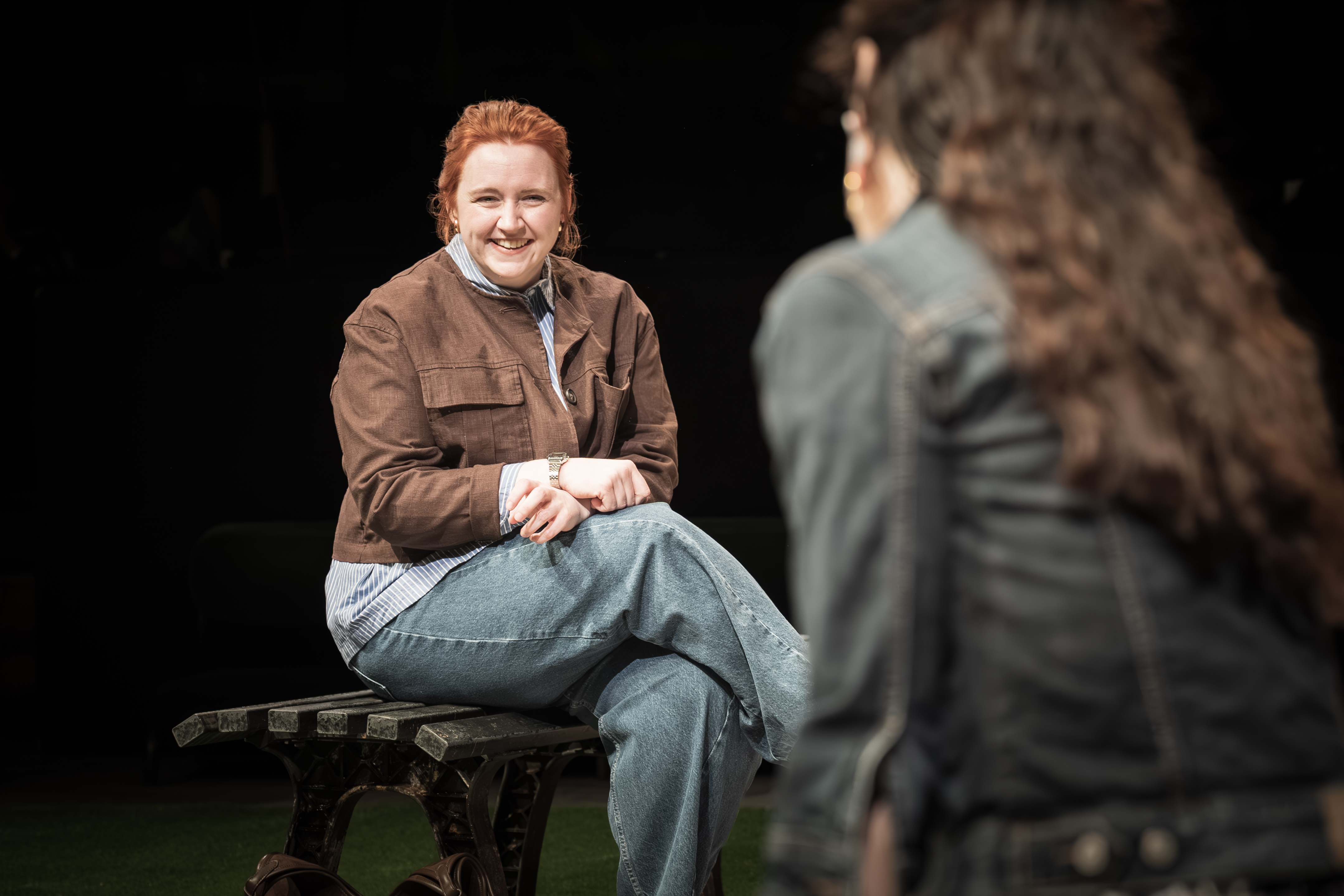
Benefiting from the lightest of touches – the final section is like a long slow exhale after the deepest of breaths. Two women encounter each other in Angel Meadow in the current day. One has come to the park with her young daughter, the other is looking at apartments in a nearby block.
Their conversation, tentative and random, picks away at what it means to be Irish, marvels at the city’s new skyline. Stops and starts. In between the silences, one of them reveals a recent unfathomable loss. The matter-of-factness of its telling barely concealing the depth of feeling involved.
Cassidy and Pearce are quietly moving as the two strangers, casually chatting, joking – but then without missing a beat, gentle with each other’s feelings.
Thirty years since the bomb, fifty years of the Exchange – the play, especially the anecdote-stuffed central section, feels too tied to a brief, too entangled with this point in the theatre’s history, to endure in its entirety as a performed work beyond this staging.
Yet, the opening and closing parts of Even These Things are bold choices, showcasing a writer confidently experimenting with voice and form, evolving and moving forward just like the city that inspired the play.
Even These Things runs at Royal Exchange, Manchester from 15 May to 15 June 2026.
Images by Marc Brenner.
Performance seen on 20 May 2026.